Thursday, May 12, 2011

Have A Amazing Caracals ..


Mammal. Caracals are also called desert lynx because of their resemblance to lynx.
  • They can survive for long periods without water, obtaining moisture from their prey.
  • “Karakal” is Turkish for “black ears.”
  • Their ears are larger than most other cats, and they are topped by long, black tufts of fur.
  • Caracals are agile tree-climbers, and will sometimes store the remains of their prey in the forks of trees or bushes.
  • They are known for their bird-catching abilities. Their strong legs and big paws enable them to jump up and knock birds out of the air.

Thursday, May 5, 2011

Miracle Of Seas!!!

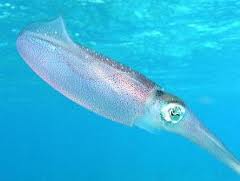
There are over 50,000 known species of Mollusks, which makes them second only to the Arthropods in invertebrate phylum size. Among the Mollusks are some of the most well known of invertebrate sea creatures, like snails, clams, mussels, squid, and octopods. Although one might not see an obvious physical relationship between a snail and a squid, they are remarkably similar in construction.


In general, mollusks have 3 body regions: a head, a visceral mass, and a "foot." The head contains the sense organs and "brain," while the visceral mass contains the internal organs. The "foot" is the muscular lower part of the body which is in contact with the substrate. Mollusks usually have a shell (although some do not). Mollusks also have an extension of the body wall called the mantle. This portion of the animal's anatomy is responsible for secreting the shell. The mantle encloses the mantle cavity which contains the Ctenidia (gills), anus and excretory pores.


Many mollusks have a radula, a tongue of sorts, which is rough like sandpaper and is used to rasp away at food. The radula is made of a hard material called chitin, the same material of which Arthropod exoskeletons are made. In addition, some Mollusk radulae are impregnated with magnetite to give them superior wear characteristics.

Wednesday, May 4, 2011

Get Information About Arrow Crab!!

The Arrow Crab is known for being territorial. The Arrow Crab is very docile towards divers, but acts very aggressively towards other sea creatures, including its own species.

The Arrow Crab has eight spider-like legs and has a head that is exceptionally pointed at the tip. The legs of an Arrow Crab can be more than three times its body length. The body of an Arrow Crab is composed of many colors. The whole body is covered in a golden-brown color, with white, brown, or gold stripes running along the crab's body. The ends of the legs are dark violet. As the Arrow Crab grows it will shed an outer layer of its skin called the exoskeleton.


The Arrow Crab is a nocturnal creature, meaning that it does most of its daily responsibilities at night time. The crab will do all of its scavenging during the night time. Since the Arrow Crab is nocturnal, it is rarely seen out during the daylight hours. These crabs do not fear divers who want to come and take pictures of it, but when it comes to other animals, even its own species, the Arrow Crab can be quite territorial.

Thursday, April 28, 2011

Get Information About Weasels

Weasels vary in length from 12 to 45 centimeters (5 to 18 in), and usually have a red or brown upper coat and a white belly; some populations of some species moult to a wholly white coat in winter. They have long slender bodies, which enable them to follow their prey into burrows. Their tails may be from 22 to 33 centimeters (9 to 13 in) long. As is typical of small omnivores, weasels have a reputation for cleverness and guile.

Weasels feed on small mammals, and have from time to time been considered vermin since some species took poultry from farms, or rabbits from commercial warrens. Weasels occur all across the world except for Antarctica, Australia, and neighboring islands.

Where it lives

  • The weasel can be found almost anywhere in Canada (the coast, the mountains, the prairies and the far north). The weasel will move into a den of an animal that it has killed.

Babies

  • In April, two to ten babies are born in a burrow. The nest is lined with fur from animals that the weasel has killed.
  • The mother watches them closely and takes good care of them. In about five weeks their eyes are open. Young weasels begin to hunt when they are about two months old.

Appearance

  • The weasel has a tiny face, sharp teeth and claws, and a tail with black fur at the tip. In winter it is white and in summer it is brown.
  • The short-tailed weasel is a tiny animal, only 15 to 23 cm long.

Food

  • It hunts for rabbits, rats, birds, frogs, ground squirrels and pika ( a small rodent that lives in the mountains) . It eats hundreds of meadow mice. Weasels that live in the north also feed on Arctic hare and lemming.

The weasel can find the open entrance to an animal's tunnel and hunt the animal underground.

The weasel usually hunts at night. It kills its prey by biting it at the back of the neck. Chicken farmers do not like the weasel. It can kill several chickens at a time. But weasels are useful animals because they eat many rats and mice.

Wednesday, April 27, 2011

Know About Dog Fish!!!


Dogfish name for a number of small sharks of several different families. Best known are the spiny dogfishes (family Squalidae) and the smooth dogfishes (family Triakidae). Spiny dogfishes have two spines, one in front of each dorsal fin, and lack an anal fin. The common spiny, or piked, dogfish ( Squalus acanthus ) is found in most oceans of the world and is particularly abundant in shallow, temperate waters.


Its gray skin is speckled with white. Females of this species may reach a length of 4 ft (120 cm) and weigh 15 to 20 lb (6.3-9 kg); males are smaller. The spines in this species contain venom that can cause a very painful wound. Spiny dogfishes migrate seasonally, preferring water within a certain temperature range. They feed on a variety of fishes and invertebrates and cause great damage to populations of commercially valuable fish. In Europe they are fished for food. Other members of the spiny dogfish family are found in deep water. The smooth dogfish ( Mustelis canis ) is found on the Atlantic coast of America from Brazil to Cape Cod. It is gray in color and grows to a length of about 5 ft (150 cm). Of no commercial value, it migrates seasonally and feeds on small fishes and invertebrates.


Like the spiny dogfish, the smooth dogfish is much used for dissection by students of vertebrate anatomy. The smooth dogfish family also includes two small sharks abundant on the Pacific coast of the United States, the brown smoothhound ( Rhinotriacis henlei ) and the leopard shark ( Triakis semifasciata ); the latter is strikingly marked with black on a tan background. The name dogfish also refers to certain unrelated bony fishes (see bowfin ). The dogfish sharks are classified in the phylum Chordata , subphylum Vertebrata, class Chondrichthyes, order Selachii.

Friday, April 22, 2011

Long Life Giant Tortoise !!!


Tortoises (Testudinidae) or land turtles are a family of land-dwelling reptiles of the order of turtles (Testudines). Like their marine cousins, the sea turtles, tortoises are shielded from predators by a shell. The top part of the shell is the carapace, the underside is the plastron, and the two are connected by the bridge.

The tortoise has both an endoskeleton and an exoskeleton. Tortoises can vary in size from a few centimeters to two meters. Tortoises are usually diurnal animals with tendencies to be crepuscular depending on the ambient temperatures. They are generally reclusive animals.

There are many old wives tales about the age of turtles and tortoises, one of which being that the age of a tortoise can be deduced by counting the number of concentric rings on its carapace, much like the cross-section of a tree. This is not true, since the growth of a tortoise depends highly on the accessibility of food and water. A tortoise that has access to plenty of forage (or is regularly fed by its owner) will grow faster than a Desert Tortoise that goes days without eating.

Tortoises generally have lifespan comparable with those of human beings, and some individuals are known to have lived longer than 150 years. Because of this, they symbolize longevity in some cultures, such as China.

The oldest tortoise ever recorded, and one of the oldest individual animals ever recorded, was Tu'i Malila, which was presented to the Tongan royal family by the British explorer Captain Cook shortly after its birth in 1777. Tui Malila remained in the care of the Tongan royal family until its death by natural causes on May 19, 1965. This means that upon its death, Tui Malila was 188 years old. The record for the longest-lived vertebrate is exceeded only by one other, a koi named Hanako whose death on July 17, 1977 ended a 226 year life span