Friday, January 28, 2011

Hunter-Butterfly Fish

* This fish is known as a surface hunter because of the fact that it is trained to hunt for prey by being at the surface. Also, because of the upturned mouth, it is easier for the fish to capture small prey along the water's surface.

* Creeks, lakes and swamps, are known to provide for the ideal habitat for the African butterfly fish, as the water in these regions tend to be slow-moving and still. Also, these places are abundant in surface foliage, providing the fish good cover from predators. When kept as a pet, it must be housed in aquarium of at least 20 US gallons.


* The African butterfly fish is known to be a super jumper. This is why it is imperative to have a good cover on the aquarium.

* A year round temperature of 73°F - 86°F is what is considered to be the ideal one required by the fish to survive.


* Coming to an important part of the African butterfly fish care, its a carnivore and its diet consists of crickets, flies, mosquitoes, small spiders, worms, and even gut-loaded small fish. Sometimes, even canned foods will also do. However, it does not prefer prepared food.


* If you plan to keep other fishes along with the African butterfly fish, then best it is to go for those types that swim in the bottom or middle. As you know, this fish which we are talking about, is a surface dweller, and it is aggressive towards other top-dwelling fishes. According to experts the best species of fishes which can mingle well with this one include Congo tetras, elephant nose fish, West African cichliads, and African knife fish.

* Slightly soft, acidic water, is preferred by this fish species, with a pH value of 6.9 - 7.1 and KH of 1-10.


* When it comes to sexing, you can distinguish a male from a female, only when the latter is carrying eggs. Because then, the female appears fatter than the male. However, one feature that may help in this, is the rear edge of the anal fin. In case of a male, it is shaped convexly, while it is a straight one for a female.


* When you are housing the African butterfly fish, ensure that the filtration of the aquarium is not too strong. This is due to the preference of this swimmer to dwell in still waters.

* As a beginner, the prospect of breeding these fish is not a bright one. And even if you are able to do so, raising the fry is another challenge. This is because, the juveniles will only feed on food that come floating into their mouths.

Thursday, January 27, 2011

Island Gigantism

A new study shed light on why tortoises and turtles come in such a wide range of sizes.

"island gigantism," exemplified by the giant tortoises which inhabit the Galapagos Islands, the Seychelles and Mascarene Islands,"One of the striking patterns in chelonians, that is, turtles and tortoises, is the fantastic range in body size,"

"You have some species that are not much more than a few grams, to the sea turtles which are over 600 or 700 kilograms. So we wanted to understand that diversity of size, and one of the most striking examples of size evolution within turtles is the evolution of gigantism in the island species in the Galapagos and Seychelles."The team collected carapace measurements for 226 chelonian species. They classified the species into four basic habitat categories -- freshwater, mainland, marine or oceanic island.


They then compared the data set within several modeling parameters, and calculated different optimal body sizes according to habitat.Freshwater chelonians in general are much smaller than the sea turtles or island tortoises, but display a much broader size variation.

"I think what's going on is we've really identified that habitat, in very broad brush strokes, has something to do with the size diversity that we see in the chelonians," "If we were to collect more ecological data we probably could explain more of the size variation within the freshwater or mainland terrestrial species."

"I would not have been surprised if we found that the change in size evolution, or the association between shifts in size evolution, and habitat wasn't that strong."

Examined the relationship between body size and island endemism in birds and mammals. But theirs is the first study to show a strong evolutionary preference for gigantism as an optimal condition in oceanic island tortoises.They say past research suggests that large size was a preadaption, which allowed the ancestors of modern island chelonians to initially reach and populate the islands.


But the fact that they kept their large size suggests that size was at least selectively maintained in the descendants of the initial immigrants.Their size is thought to be linked to a lack of predators, lack of competition for resources and adaptation to potentially erratic environmental fluctuations on islands.


They draw attention to the fact that oceanic islands are susceptible to unpredictable periods of adverse conditions, and that their larger size would make it easier to survive times of reduced food supply.

"Size is a good proxy for many ecological characters," Alfaro says. "It's a character that can be measured pretty readily and compared in a reasonable way across very diverse organisms. What we're doing is constructing a time-tree for vertebrates and conducting new kinds of statistical analyses to find where the hotspots in evolutionary change are."

Monday, January 24, 2011

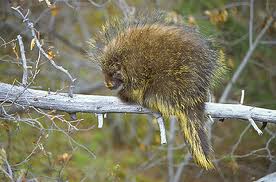
porcupine- solitary animal


The common porcupine is a solitary animal, although it may den with other porcupines in the winter. It makes its den in caves, decaying logs and hollow trees. The common porcupine doesn't hibernate, but it may stay in its den during bad weather.


The common porcupine is a good swimmer, its hollow quills help keep it afloat. It is also an excellent tree-climber and spends much of its time in trees. It is a very vocal animal and has a wide-variety of calls including moans, grunts, coughs, wails, whines, shrieks and tooth clicking.

Thursday, January 20, 2011

Be Friend with Possum!!!


Possums have adapted well to contact with people. However, at times this contact can be noisy and messy - particularly if the possum takes up residence in the roof of your house! If this happens, the possum can be trapped and removed from the ceiling cavity, provided you first obtain a special licence from the NPWS. You must release your resident possum back onto your property, as it will not survive if removed from the area. In some areas, wildlife rehabilitation groups will help you with this.


The best solution is to actually make friends with local possums! If you encourage a possum to stay around and claim your yard as its territory, other possums will be discouraged from taking up residence.

Although you should not feed your resident possum, you could try building it a special shelter, somewhere safe (and away from your roof cavity) where it won't be disturbed by dogs or people.

Wednesday, January 19, 2011

Bitterns-Habitat

A solitary species, the American Bittern is more often heard than seen. It is a stout heron, with mottled buff-brown plumage. Its neck can be held in to appear short and sturdy, or extended to look long and slender. Its upperparts are solid brown, with darker outer wings. The adult has a dark streak on either side of its neck; the streak is absent on the juvenile.

Habitat
American Bitterns are found in dense freshwater marshes and extensive wet meadows. They prefer wetlands with thick cattail and bulrush, mixed with areas of open water. In the winter, they can be found in a wider range of habitats, including flooded willow and salt marshes.

Behavior

American Bitterns stand still at the edge of the water, sometimes walking slowly. Like most herons, they capture prey with sudden thrusts of their bills. They are most active at dawn and dusk. When alarmed, the bittern extends its neck and head vertically and freezes or sways with the breeze, blending in with the surrounding vegetation.


Its eyes are set low on its head, enabling the bittern to see forward when it stands in this pose. The bizarre call of the American Bittern is the easiest way to locate this hard-to-find bird. The call is often described as sounding like a water pump. This dramatic and unusual vocalization is often heard at dusk or dawn and can carry long distances. The American Bittern produces this sound by spectacular contortions performed with its air-filled esophagus.


Migration Status

Northern populations, where water freezes, are strongly migratory. In milder areas, where water doesn't freeze, they will likely stay in the same area year round. In areas where they migrate, they leave in late September or early October and return from late April to early May.

Tuesday, January 18, 2011

Chytridiomycosis-In Amphibians...

Scientists were shocked to find that an entire class of organisms are at the brink of extinction. These are the amphibians.

Amphibians have a harder time with global warming than mammals and other organisms, because their bodies have permeable skin that absorbs water and oxygen, and their lives depend on clean and fresh water.


About 122 species of amphibians have already gone extinct, with 5,734 known species. But scientists believe that both figures could be underestimates because of all the unknown species. The latest threat, being a rapidly spreading fungal disease, is is predicted to wipe out about half the amphibian species exposed to it within six months.

Chytridiomycosis, which damages the skin, is caused most by climate change and polluted water.